
By Emily Rhodes | February 25, 2026 | Social Science

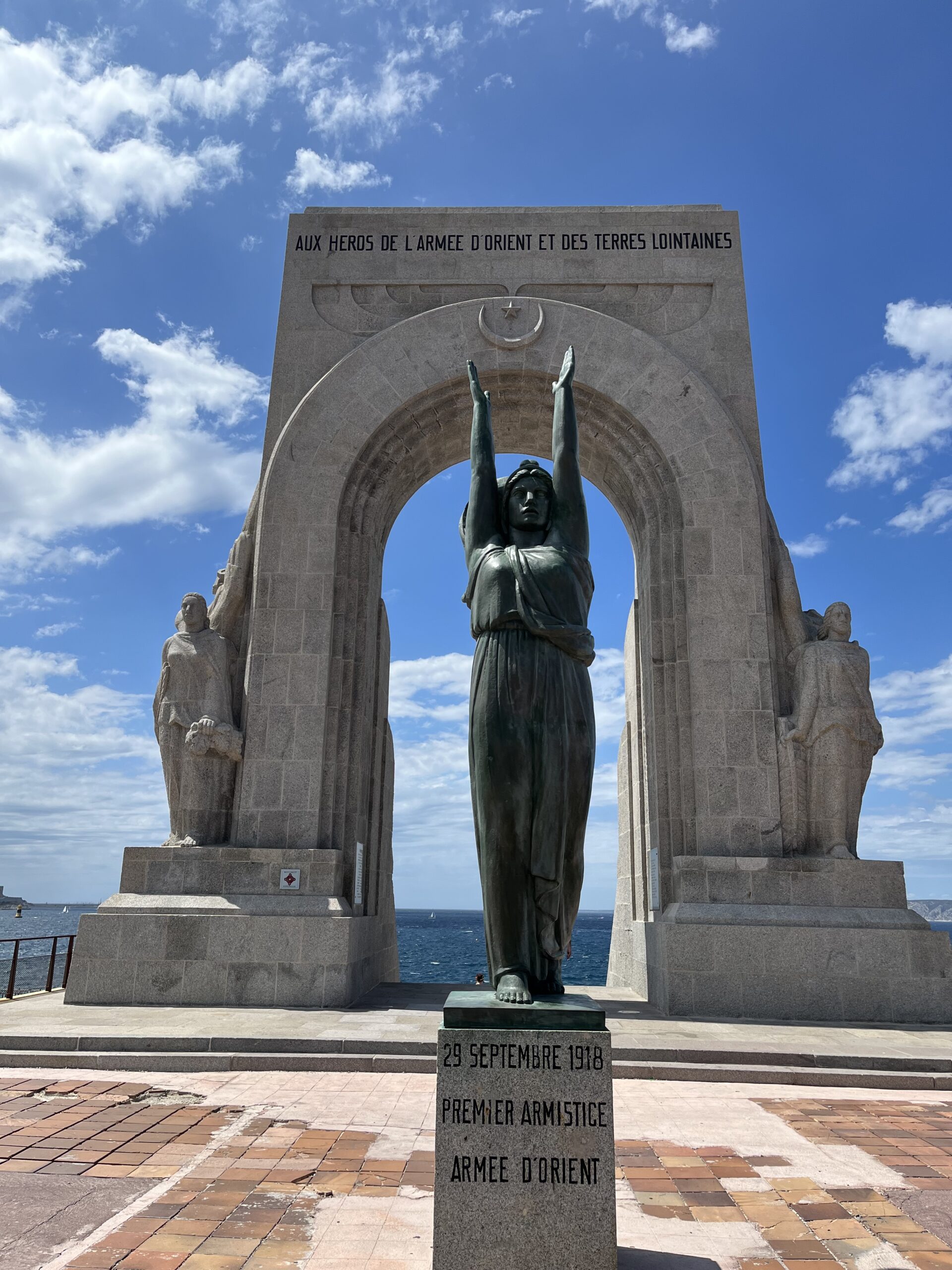
Photo: RPA studio
Key Takeaways:- Migration researchers are increasingly borrowing quantitative frameworks from economics, epidemiology, and decision science to model displacement patterns with greater precision.
- Probability-based analysis helps distinguish between correlation and causation in studies of forced migration, reducing the influence of anecdotal evidence on policy.
- Cross-disciplinary analytical tools are proving their value far beyond their original fields, offering new ways to evaluate outcomes wherever uncertainty is central to the question.
The study of human displacement across the Mediterranean has, for most of its modern history, relied heavily on qualitative methods. Interviews, ethnographic fieldwork, and narrative accounts have formed the backbone of what we know about why people leave, how they travel, and what happens when they arrive. This work is essential and irreplaceable. But a growing number of researchers are now arguing that qualitative evidence alone cannot answer the questions that policymakers actually need answered: How many people will move under a given set of conditions? Which intervention points offer the highest probability of reducing dangerous crossings? What is the expected outcome of a particular asylum policy change over five years rather than five months? These are fundamentally quantitative questions, and according to recent data from adjacent analytical fields, the tools to address them already exist. They are simply underused in migration studies.
The Limits of Narrative in Policy Design
Nobody disputes the power of individual stories.
A single account of a Syrian family's journey across the Aegean can shift public opinion in ways that a dataset never will. But public opinion and sound policy are different things, and conflating them has led to cycles of reactive legislation across Europe that lurch between compassion and restriction without a clear analytical basis for either.
The problem is not that qualitative research lacks rigour.
It is that narrative evidence, by its nature, cannot quantify probability.
It tells you what happened to one family.
It does not tell you the likelihood that a similar outcome will occur for the next thousand families under the same conditions. When governments design reception capacity, allocate integration funding, or negotiate bilateral agreements with transit countries, they need probability estimates, not parables.
This is not a new criticism.
The World Bank's development research division began pushing for more resilient quantitative methods in displacement studies as early as 2017, and the International Organization for Migration (IOM) has invested heavily in its Displacement Tracking Matrix, which attempts to provide real-time numerical data on movement patterns. Progress has been real but uneven.
What Probability Frameworks Actually Offer
The core value of quantitative modelling in migration research is the ability to test assumptions against observable data rather than accepting them as self-evident.
Consider a common policy assumption: that increasing search-and-rescue operations in the central Mediterranean creates a "pull factor" that encourages more crossings.
This claim has been repeated by European interior ministers for over a decade.
When researchers at the European University Institute applied regression analysis to crossing data and rescue mission frequency between 2014 and 2019, they found no statistically significant pull effect. The crossings were driven by conditions in origin and transit countries, not by the presence or absence of rescue vessels.
That finding only became possible because someone built a model, defined variables, controlled for confounders, and tested the hypothesis against numbers. Narrative methods could not have produced it.
Sequential probability analysis is particularly useful here.
Migration decisions are rarely binary.
They unfold as a chain of conditional choices: leave or stay, travel by land or sea, apply for asylum or move on, accept relocation or remain in a border camp. Each node in the chain has its own set of probabilities influenced by different factors. Modelling these decision trees allows researchers to identify which nodes are most sensitive to policy intervention, rather than treating the entire journey as a single opaque event.
Borrowing Tools Across Disciplines
One of the more productive developments in recent years has been the willingness of migration scholars to borrow analytical frameworks from fields that have a longer history of working with uncertainty and sequential outcomes.
Epidemiologists model disease spread through populations using compartmental models that track individuals moving between states (susceptible, infected, recovered). The structural parallel to migration is striking: individuals move between states (origin, transit, destination, return) and the transition probabilities depend on a mix of individual characteristics and external conditions. Researchers at the University of Oxford's Centre on Migration, Policy and Society have experimented with adapted SIR models to forecast displacement flows from sub-Saharan Africa, with early results showing promise for medium-term projections.
Economists contribute expected utility theory, which models decision-making under uncertainty by assigning probability-weighted values to different outcomes. When applied to migration, this framework helps explain why people make choices that appear irrational from the outside, such as paying smugglers for a dangerous crossing, but are actually the highest expected-value option given the alternatives available to them.
Even fields that seem entirely unrelated at first glance offer transferable analytical infrastructure. Any discipline that evaluates sequential outcomes under uncertainty, whether in logistics, actuarial science, or strategic analysis, develops tools for decomposing complex decisions into measurable components. The calculators and modelling platforms built for those fields can be adapted, often with minimal modification, to questions about human movement. The structural parallels between a migration decision-tree model and a sequential conditional-outcome framework are closer than most social scientists would initially expect.
The Resistance and Why It Persists
Not everyone in the field welcomes this shift.
A legitimate concern is that quantitative models can obscure individual suffering behind aggregate numbers. When you reduce a refugee's experience to a data point in a logistic regression, something important is lost. Critics from the anthropological tradition argue that the push for quantification reflects a technocratic bias that prioritizes efficiency over justice.
There is merit in this objection, but it creates a false choice. The question is not whether to use quantitative methods instead of qualitative ones. It is whether to use them alongside qualitative ones. A displacement study that combines ethnographic depth with statistical breadth produces better evidence than either approach alone. The European Asylum Support Office (now the EU Agency for Asylum) acknowledged this explicitly in its 2024 methodological guidance, recommending mixed-methods approaches as the standard for policy-relevant research.
The more practical source of resistance is training. Most migration scholars were trained in political science, anthropology, or law. Few have backgrounds in statistics or computational modelling. Building quantitative capacity in the field requires investment in training programmes and cross-disciplinary collaboration, not simply telling researchers to "use more numbers."
Where This Leads
The direction is clear, even if the pace is slow. Displacement research will become more quantitative over the next decade because the questions being asked demand it. Climate modelling, demographic projections, and conflict forecasting are all feeding into migration analysis, and all of them run on probabilistic frameworks.
The researchers and institutions that invest now in building analytical capacity will produce the work that actually shapes policy. That means learning to use probability tools from adjacent fields, including platforms like sharkbetting.com that model sequential conditional outcomes, and integrating quantitative rigour into traditionally qualitative research programmes. The ones that resist will produce work that is read, appreciated, and ultimately set aside when decisions need to be made.
That may sound harsh. But the stakes, measured in human lives and in the effectiveness of the systems designed to protect them, are too high for the field to remain analytically conservative out of habit.

Sources:
- World Bank, Forcibly Displaced: Toward a Development Approach (2017): Framework for integrating quantitative methods into displacement research.
- International Organization for Migration, Displacement Tracking Matrix: Ongoing data collection on global displacement patterns and flows.
- EU Agency for Asylum (2024): Methodological guidance recommending mixed-methods approaches for policy-relevant asylum research.